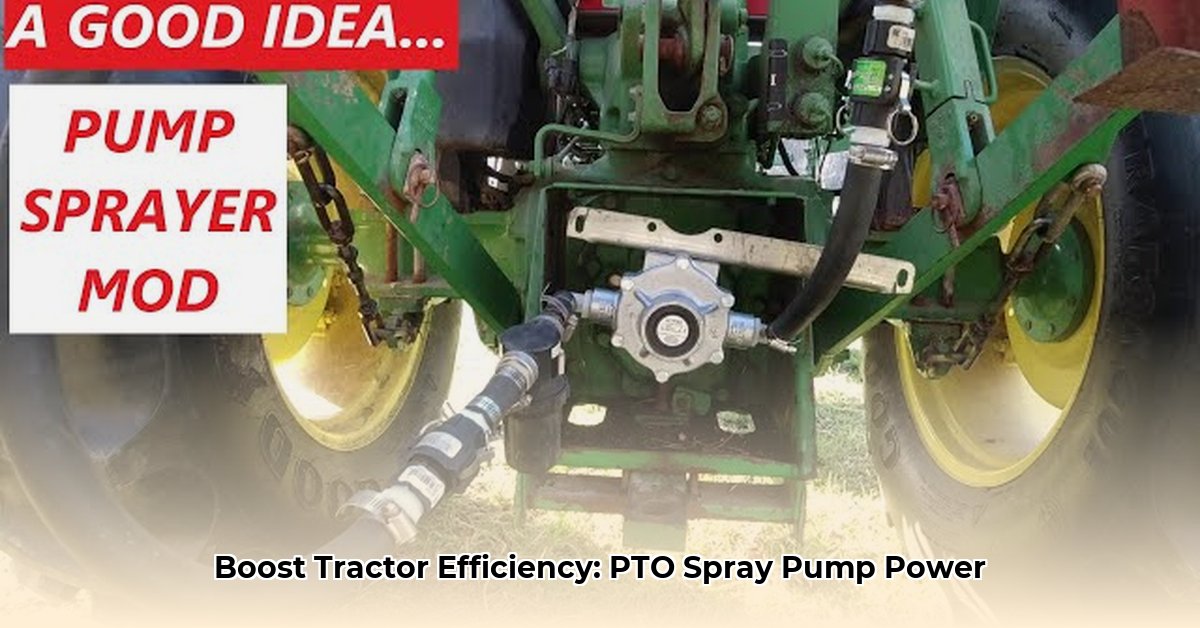
Choosing the right PTO spray pump significantly impacts your farm's efficiency and environmental footprint. This guide helps you select, install, and maintain your pump for optimal performance and long-term cost savings. For more sprayer tank options, check out this helpful resource: sprayer tank options.
Understanding PTO Spray Pump Types
Two primary PTO spray pump types exist: roller and centrifugal. Each excels in different applications.
Roller pumps generate high pressure, ideal for orchard spraying or applications requiring forceful chemical delivery. However, they typically have lower flow rates (GPM), making them less suitable for large-scale operations. Think of them as powerful but precise.
Centrifugal pumps, conversely, excel at high volume spraying, perfect for large fields. Their strength lies in covering vast areas quickly. They are, however, generally lower pressure than roller pumps and less suited to thick liquids. Imagine them as the high-speed, large-area specialists.
Here's a comparative table summarizing their key characteristics:
| Pump Type | GPM (Gallons Per Minute) | PSI (Pounds per Square Inch) | Chemical Suitability | Ideal Application |
|---|---|---|---|---|
| Roller | Typically lower | Typically higher | Thicker fluids, herbicides, targeted spraying | Orchards, smaller fields, precise applications |
| Centrifugal | Typically higher | Typically lower | Water, thinner chemicals, broad coverage | Large fields, high-volume spraying |
Do you need high pressure for targeted application or high volume for broad coverage? This question is critical in determining the right pump for your needs.
Pump Material Selection: Durability and Longevity
The pump's material significantly impacts its lifespan and resistance to corrosion. Common materials include cast iron, Ni-Resist, and Silvercast.
| Material | Corrosion Resistance | Longevity | Cost | Pros | Cons |
|---|---|---|---|---|---|
| Cast Iron | Moderate | Moderate | Low | Affordable, readily available | Prone to corrosion, especially with acidic chemicals |
| Ni-Resist | High | High | Medium | Excellent corrosion resistance, durable | More expensive than cast iron |
| Silvercast | Very High | Very High | High | Superior corrosion resistance, extremely durable | Highest initial cost, specialized maintenance needed |
Choosing the right material depends on the chemicals you'll use and your budget. While cast iron is cost-effective for milder chemicals, Ni-Resist or Silvercast offer superior longevity and corrosion resistance when dealing with aggressive chemicals. What chemicals will you be using? This will heavily influence the cost-effectiveness calculation.
Selecting the Right Pump: A Step-by-Step Guide
Choosing the right PTO spray pump requires careful consideration of several factors. Follow these steps:
- Assess your needs: Determine your required GPM and PSI based on the acreage and the type of chemicals used.
- Chemical compatibility: Ensure the pump material is compatible with your chosen chemicals.
- Budget considerations: Balance upfront cost with long-term operational expenses.
- Maintenance planning: Factor in regular maintenance costs to extend your pump’s lifespan.
- Consider your tractor: The tractor's PTO horsepower and hydraulic system compatibility must align with the chosen pump.
Following these steps ensures you'll select a pump perfectly matched to your needs and budget.
Installation, Maintenance, and Troubleshooting
Proper installation and routine maintenance are crucial for longevity and efficient operation. Consult the manufacturer’s instructions for installation details. Regularly inspect for leaks, wear, and proper lubrication. Preventative maintenance minimizes costly repairs and downtime, ensuring consistent performance. Ignoring routine maintenance could lead to significantly higher costs and lost productivity down the line. Is your current maintenance plan sufficient to prevent these issues?
Cost-Benefit Analysis: Total Cost of Ownership
Don't focus solely on the initial purchase price. Consider the total cost of ownership (TCO), which encompasses the purchase price, maintenance, repairs, and the pump's lifespan. A higher-priced, durable pump might offer better long-term value due to reduced maintenance and extended lifespan, ultimately proving more cost-effective over time. How do you anticipate these costs evolving throughout your pump's lifetime?
Conclusion: Maximizing Efficiency and Sustainability
Selecting the right PTO spray pump is a crucial decision impacting both efficiency and sustainability. This guide provides a framework for making an informed choice. By carefully considering pump type, material, and your specific operational needs, you can optimize your spraying operations, reduce your environmental impact, and ultimately improve your farm's profitability. Remember, a well-chosen, well-maintained pump is an investment in the long-term health and success of your operation.